PTSD and Its Implications for Peace Officer Selection: Neurobiological Effects, Cognitive Impairment, Use-of-Force Decision-Making, and Current Assessment Implications
Instructor: John M. Violanti, PhD
This course is approved for California POST Continuing Professional Education credit.
Course Description
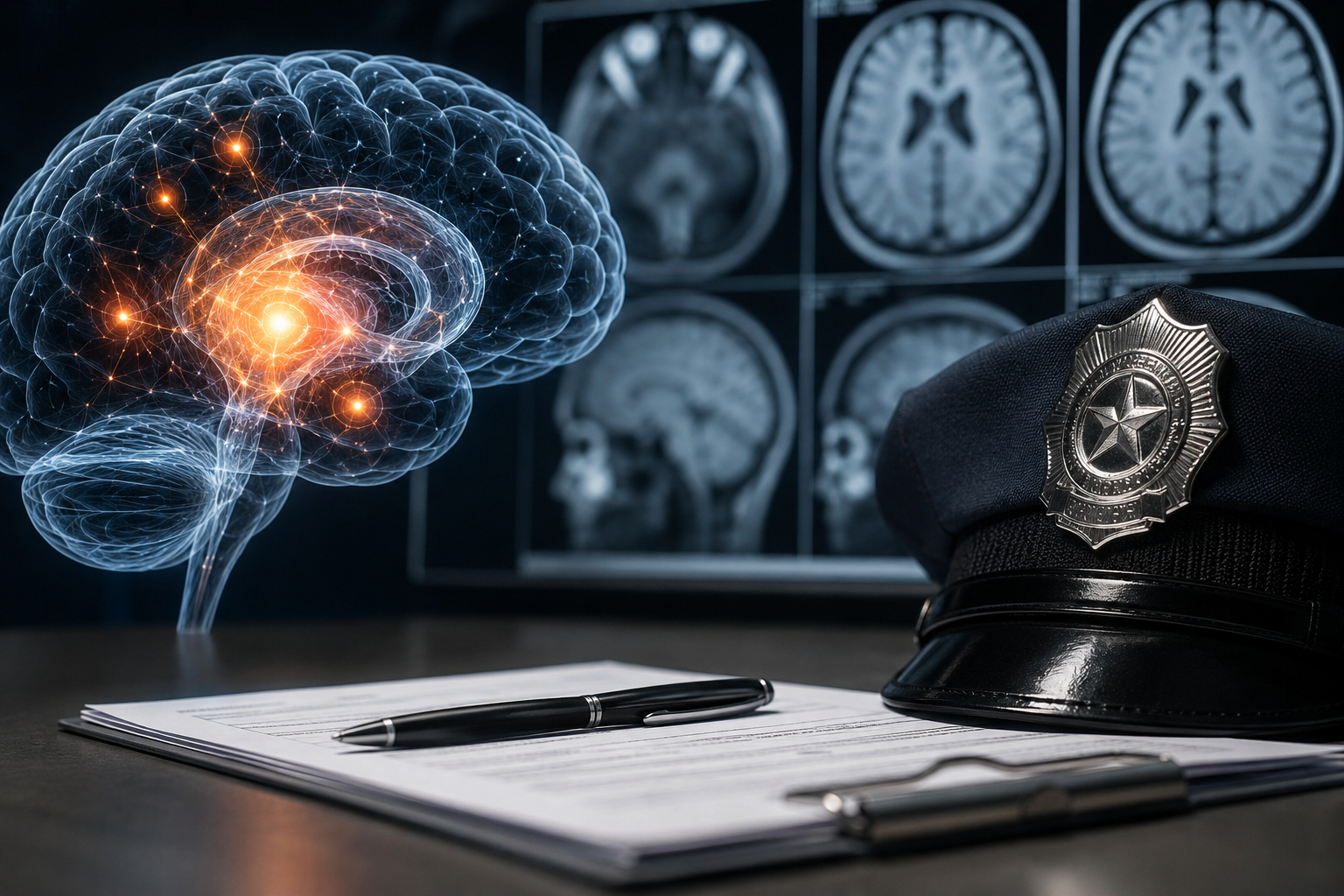
This course examines the neurobiological and cognitive consequences of PTSD as they apply to psychological pre-employment evaluation of peace officer candidates. Drawing on peer-reviewed research in police psychology, cognitive neuroscience, and electrophysiology—including the University at Buffalo studies by Violanti and colleagues—participants will develop a comprehensive understanding of how trauma-related brain changes affect threat perception, response inhibition, and use-of-force decision-making. Assessment implications for current PEPE practice, including MMPI-3 applications, are addressed throughout.
Program Goals
Building upon doctoral-level training in psychological assessment, psychopathology, and neuropsychology, this program extends competency into the specialized domain of public safety pre-employment evaluation by integrating current peer-reviewed evidence on PTSD's neurobiological and cognitive sequelae with applied assessment practice. Participants will expand their capacity to conduct dimensionally comprehensive evaluations of trauma-exposed candidates that move beyond affective symptom screening to address the executive function, attentional, and inhibitory control deficits most directly linked to peace officer performance and public safety outcomes.
Learning Objectives
After completing this course, participants will be able to:
- Identify the neurobiological mechanisms by which PTSD alters amygdala, prefrontal cortex, and hippocampal functioning and explain how these changes increase risk for use-of-force errors in peace officers
- Describe the cognitive deficits associated with PTSD — including impairments in response inhibition, working memory, and attentional control — as documented in peer-reviewed research with law enforcement samples
- Differentiate between PTSD as an emotional regulation concern and PTSD as a cognitive impairment concern within the framework of peace officer pre-employment psychological evaluation
- Apply findings from the University at Buffalo neurophysiological research program, including event-related potential evidence from law enforcement samples, to inform interview strategy and data integration in pre-employment evaluations of trauma-exposed candidates
- Analyze the pathway from PTSD-related neurobiological changes to elevated rates of excessive force allegations, identifying the specific cognitive capacities — including bias suppression, impulse control, and perspective-taking — that are impaired by chronic trauma exposure
📄 Downloadable course materials included
Course Outline
- 1Section 1: PTSD and Peace Officer Selection — Why This Matters (20 minutes)
- 2 - Epidemiology of PTSD in law enforcement: prevalence rates and occupational context
- 3 - Why PTSD extends beyond emotional regulation into cognitive and operational domains
- 4 - The evaluator's role in bridging the research-to-practice gap
- 5 - Military veterans in the law enforcement pipeline: compounding evaluative complexity
- 6Section 2: Prevalence, Occupational Consequences, and Functional Impairment (30 minutes)
- 7 - Dose-response relationships between trauma exposure and PTSD symptom severity
- 8 - Subclinical PTSD and its functional relevance to suitability assessment
- 9 - Downstream occupational effects: suicide risk, misconduct, and use-of-force implications
- 10 - What prevalence data means for candidate evaluation strategy
- 11Section 3: Neurobiological Mechanisms of PTSD (40 minutes)
- 12 - Structural and functional changes in the amygdala, prefrontal cortex, and hippocampus
- 13 - HPA axis dysregulation, cortisol, and physiological arousal under stress
- 14 - How neurobiological recalibration degrades inhibitory control and threat appraisal
- 15 - The cortisol-to-decision-making pathway and its relevance to use-of-force errors
- 16Section 4: Cognitive Impairments Associated with PTSD (35 minutes)
- 17 - Attentional deficits: hypervigilance, attention bias variability, and oscillation effects
- 18 - Working memory impairment and its impact on dynamic field decision-making
- 19 - Response inhibition deficits and the cognitive basis of commission errors
- 20 - Distinguishing trauma exposure effects from PTSD diagnosis effects in cognitive research
- 21Section 5: University at Buffalo Research — Neurophysiology of Police Decision-Making (30 minutes)
- 22 - Event-related potentials as a measure of cognitive processing in law enforcement samples
- 23 - Go/NoGo paradigm findings: commission errors, frontal activation, and PTSD severity
- 24 - PTSD symptom severity versus years of service as a predictor of inhibitory performance
- 25 - Appropriate limits on laboratory-to-field translation of neurophysiological findings
- 26Section 6: Threat Perception, Hypervigilance, and Assessment Implications (25 minutes)
- 27 - The self-reinforcing threat cycle and its operational consequences across a work shift
- 28 - How PTSD impairs metacognitive self-monitoring during high-stakes encounters
- 29 - Mapping neurobiological findings onto POST suitability dimensions
- 30 - Integrating PTSD-related cognitive risk into structured PEPE practice
About the Instructor

John M. Violanti, PhD
- Professional Degree & Discipline:
- PhD
- Current Position & Expertise in Program Content:
- John M. Violanti, Ph.D. - is a Full Research Professor in the Department of Epidemiology and Environmental Health, School of Public Health and Health Professions, University at Buffalo, NY. He is a police veteran, serving with the New York State Police for 23 years as a trooper, a member of the Bureau of Criminal Investigation, and as a founding coordinator for the Psychological Assistance Program for the State Police. Dr. Violanti has been involved in the design, implementation, and analysis of numerous suicide, stress and health studies over the past 25 years. He previously developed a five year study on stress and cardiovascular disease in police officers for the National Institute of Occupational Safety and Health and now continues a four year follow-up on that study. Dr. Violanti recently served as a committee member for the Institute of Medicine of the National Academies, Washington, DC, concerning strategies for developing a resilient workforce for the Department of Homeland Security. He also presented testimony at the President’s Task Force on 21st Century Policing on police wellness. He has authored over 150 peer-reviewed articles and 18 books on suicide, stress and PTSD and lectured nationally and internationally at academic institutions and police agencies on matters of suicide, stress, health, and trauma at work.
Conflict of Interest Disclosure
No commercial support or conflicts of interest to disclose.
Refund & Cancellation Policy
Full refund available within 7 days of purchase if course has not been started. No refund after course content has been accessed.

Mindset Continuing Education is approved by the American Psychological Association to sponsor continuing education for psychologists. Mindset Continuing Education maintains responsibility for this program and its content.
Need accessibility accommodations? Request them here →